

AI integration
We help organisations to harness the power of AI through integrations that streamline operations, enhance workflows and expose content more effectively. Whether you're at the start of exploring what AI could do for you or ready to build, we'll guide you through the options, help to refine requirements and deliver a solution that transforms your processes.

The opportunities AI presents are real but so is the complexity. For many organisations, the challenge isn't whether AI can help – it's knowing where to start, which tools to trust and how to integrate them without disrupting what already works.
OWA can help you cut through the noise. With over 30 years’ experience scoping and building secure web applications and digital products, we bring technical depth and commercial understanding to identify how and where AI can make a meaningful difference to your organisation.




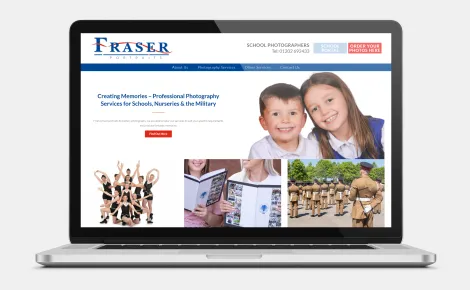
See how we’ve helped clients harness the benefits of AI with confidence – safely, practically and at the right pace.


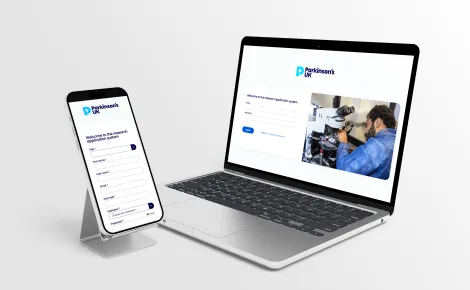
See how we’ve helped organisations launch new platforms and modernise legacy systems with measurable impact

With over 30 years of cross-industry experience in web application development, we’ll bring our deep understanding and sector-wide knowledge to your project.
We're not just developers – we're long-term partners, helping you navigate the opportunities AI presents and integrate the right solutions as your organisation evolves.
Understanding AI – a primer
Traditional artificial intelligence (AI) spots patterns in existing data and uses these to make predictions or classifications, such as flagging a suspect transaction or recommending a product. Generative AI goes further: AI assistants, chatbots and workflow automations use large datasets to produce new content in response to a prompt – whether that's text, images, code or structured data.
A large language model (LLM) is a type of generative AI trained on vast quantities of text data, enabling it to understand and produce human language with a high degree of fluency. LLMs power many of the most widely used AI tools and can be integrated into a web application or business workflow, handling tasks such as answering questions, summarising documents and processing natural language inputs.
Agentic AI refers to AI systems that can plan and carry out multi-step tasks autonomously, rather than simply responding to a single prompt. An agentic system might receive a high-level instruction, break it down into sub-tasks, call on external tools or data sources and complete a sequence of actions with minimal human intervention. This is an emerging and fast-moving area – OWA can help you understand where agentic approaches might be appropriate for your organisation and how to implement them safely.
AGI refers to a hypothetical form of AI that would match or exceed human intelligence across a broad range of tasks and does not currently exist in a practical sense. For the purposes of AI integration in your organisation, current AI tools are powerful and genuinely useful but they work best when scoped carefully around well-defined problems and supported by human oversight.
AI technologies & tools
A small language model (SLM) is a more compact alternative to an LLM, trained on a narrower dataset and designed to run efficiently – often on local infrastructure or within a specific application. SLMs are well suited to organisations that need AI capability without sending data to an external provider or where response speed and cost efficiency are priorities. OWA can advise on whether an LLM or SLM is the right fit for your use case.
Retrieval-augmented generation (RAG) combines a language model with a specific knowledge base – typically your own content, documents or data. This makes it well suited to building assistants and chatbots that answer accurately based on your content rather than drawing on broader sources across the internet.
Yes – this is currently one of the most important and practical AI integrations for organisations that have lots of user-facing data or information. Using a RAG implementation or a fine-tuned model, OWA can build a bespoke assistant that draws exclusively on your documents, knowledge base or website content – particularly useful for customer support, internal knowledge management and content discovery.
Yes – LLMs and most widely used AI platforms offer APIs that allow their capabilities to be integrated directly into web applications, back-office systems and workflows. OWA works with these APIs to embed AI functionality into your existing or newly built applications, rather than requiring you to switch to a separate AI tool or platform.
Automation & workflow integration
AI automations connect AI models to your existing systems and data sources, allowing them to run in the background and perform defined tasks in response to triggers – such as a form submission, an incoming email or a scheduled event. OWA designs automations around your specific workflows, integrating with your web applications, mobile apps, CRM, back-office systems and other tools as required.
Common examples include automated document summarising, intelligent routing of support requests, AI-assisted content drafting, data extraction from unstructured inputs, such as emails or PDFs, and automated reporting. In customer-facing applications, AI can handle initial enquiry responses or guide users through a flow before escalating to a human where needed, reducing time spent on repetitive or low-complexity tasks.
In most cases, yes. OWA can integrate AI capabilities into existing web applications, mobile apps and back-office systems via API, without requiring a full rebuild. We begin by assessing your current systems and identifying the most practical integration points, then design a solution that enhances what you already have rather than replacing it.
Data, security & readiness
The effectiveness of an AI integration is closely tied to the quality of the data it works with – good data preparation at the outset saves significant development time and produces better outcomes. Before building, OWA will help you to assess your data architecture and readiness – identifying gaps, inconsistencies or structural issues that could limit performance.
AI models can produce plausible sounding responses that are incomplete or incorrect – a well-documented limitation often referred to as hallucination. Managing this risk requires careful system design, including grounding the AI in verified sources through RAG implementations, setting clear boundaries on what the system can do and building in human review where accuracy is critical. OWA designs AI integrations with these safeguards in mind and helps you to establish appropriate oversight processes.
Data security is central to how we approach every AI integration. OWA's development processes are ISO 27001-certified, meaning security controls are applied throughout scoping, build and deployment. We will advise on which AI tools and APIs are appropriate given your data sensitivity requirements and, where necessary, recommend specific deployments to ensure your data does not leave a controlled environment.
AI for content & search visibility
Answer engine optimisation (AEO) is the practice of structuring and presenting your content so that it is surfaced accurately and prominently by AI-powered answer engines – including tools such as ChatGPT, Perplexity and Google's AI Overviews. As more users turn to these tools instead of traditional search, ensuring your content is technically optimised for crawling and citation by AI systems is becoming an increasingly important part of an organisation’s visibility.
Traditional search engine optimisation (SEO) focuses on ranking your pages in a list of search results, while AEO covers whether your content is selected by an AI system as the authoritative source for a given answer – often without the user visiting your website at all. The two disciplines overlap significantly but AEO places greater emphasis on content structure, schema markup, factual clarity and the use of authoritative sources. OWA can advise on the technical approach to optimise your content for both.
Yes – AI can be applied to your analytics data to surface patterns, anomalies and opportunities that would be difficult to identify manually. This might include monitoring API usage, identifying drop-off points in user journeys, flagging unusual traffic patterns or generating natural language summaries of performance data. OWA can help you define the right metrics and build the integrations needed to make your data more actionable.






Whether you’re looking to create a new application or facing legacy system challenges and performance bottlenecks, we're here to help.
UK-based design and development
AI integrations for workflows and content
Project planning and scope definition
Technical architecture recommendations
Migration strategy for legacy systems
Fully managed UK-based hosting and support